 MATTER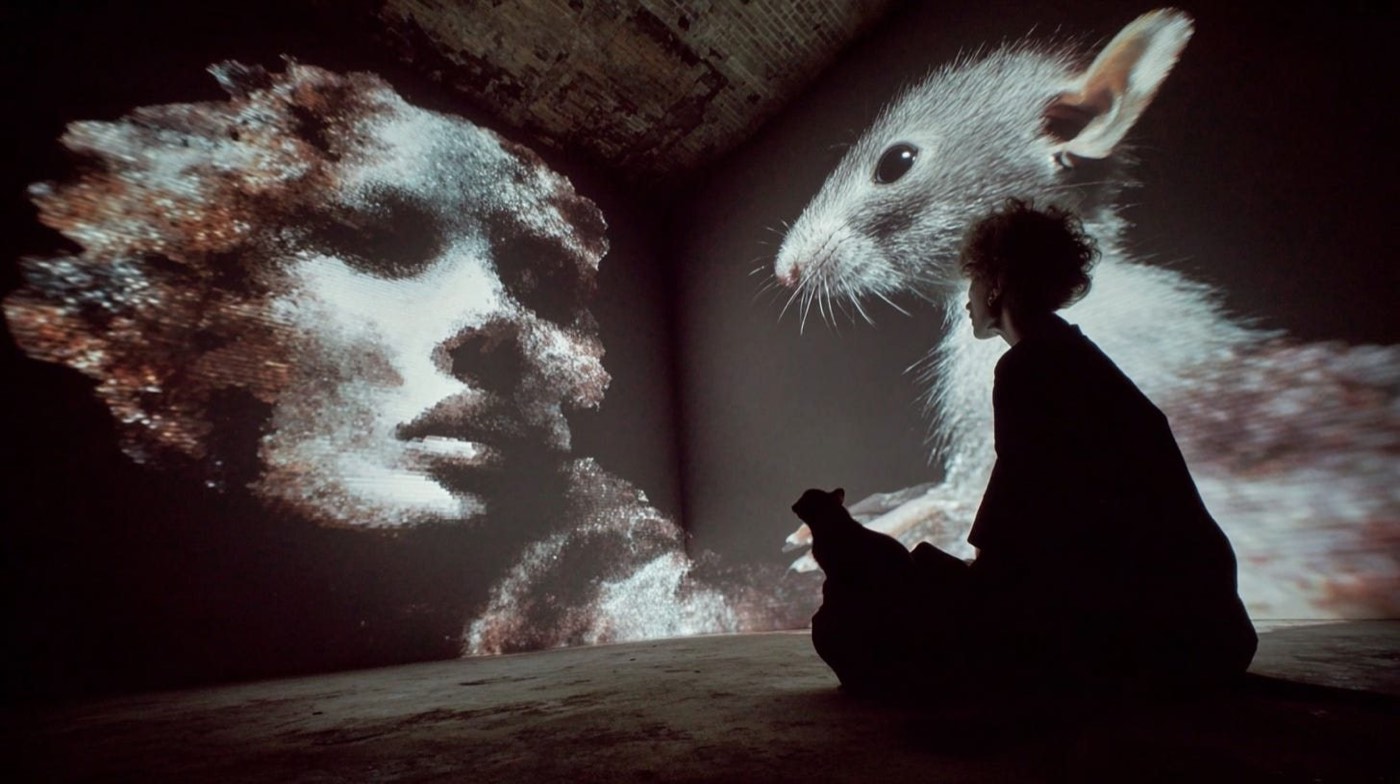
Manuel Nogueira on Homer1, attention, and subtracting until the noise floor drops.
The mouse wakes in a chamber. Light from above, even and controlled. Stimulation at regular intervals. Rewards for correct responses. The company of others nearby, doing the same tasks in adjacent spaces. A well-designed environment. It should be able to focus.
Instead it twitches. Scans. Orients toward every shift in the periphery. Every input arrives at the same volume, the important cue and the ambient flicker register identically in its prefrontal cortex, signal and noise lit up in the same neural key, so that the mouse processes everything and notices nothing. In the adjacent chamber, another mouse sits quiet. Same species, same test, presumably the same intelligence. The quiet one sees the cue. Something inside it is running softer.
You’ve had this morning. You might be having it now.
The difference between the two mice is a gene called Homer1, and I’ve been thinking about those mice since I read that. I want to say upfront that I almost didn’t read the whole article about it. It came up in something else I was reading, I forget what now, this is how it usually happens, and I marked it to look at later, and later turned into a Saturday morning when I couldn’t sleep. Again. A trail that started somewhere I can’t fully reconstruct. The reading is part of the work. Studying is a practice. It used to be that only scientists and philosophers admitted this out loud. Now I think it’s the only honest position any of us has, because the certainties are gone, and the people who pretend otherwise are usually performing.
The paper, published in Nature Neuroscience, found that Homer1 shapes attention not by making the brain work harder but by making it quieter. The mechanism, as far as I understand it, involves something called GABA receptors, which are basically the brakes of the nervous system. When certain Homer1 variants were dialed down, those brakes got stronger. Less noise. More signal. The brain got quieter, and attention got better. Because something was removed, not added.
The gain was too high. They turned it down. That’s it.
The intervention only worked during a narrow window in adolescence. The same manipulation in adult mice produced nothing. The circuitry for attention has a critical period. You build the infrastructure for quietness early, or the architecture sets, and you spend the rest of your life compensating. The adult mice weren’t broken. They just couldn’t be reached anymore.
 Open full image ↗
We are those mice. Same experiment, worse cages. And nobody is measuring us.
Last night I caught up with a friend, Theo. He runs a creative team and we ended up, the way we usually do, admitting the same struggle to each other from opposite sides of it. He said the pace this year had pushed him to find more ways of clearing his mind before deciding anything. Choosing better. Because the cost of an unclear decision changed. Every choice now triggers a cascade: agents, drafts, content moving downstream the moment you nod. If you’re not clear about what you actually wanted, the system is fast and effective in the wrong direction.
He’s a mouse trying to lower his own gain. So am I. So is everyone I talk to who’s honest enough to say it.
When my son was maybe 9, he said something to me that I’ve written about before, in different shapes, and that I’ll probably keep returning to. “Eu tava com saudade das suas pausas.” Not my words. My pauses. He noticed the absence of silence before I noticed it myself.
The mice got their window in adolescence. I think we get ours earlier. The period when a child learns what attention from an adult feels like. Whether silence is presence or absence. Whether the grown-up’s eyes ever made it to their face long enough to land. By the time anyone reaches a job where something pings every few minutes, the architecture is already there. The pings are a late-stage symptom of a much earlier shaping.
There’s a distinction worth holding between deep attention and hyperattention. Deep is sustained, slow, the mode that lets you stay with a problem long enough for it to change shape. Hyperattention is the other thing: rapid switching, low tolerance for boredom, always orienting toward whatever just arrived. The trick is that contemporary culture doesn’t just allow hyperattention. It produces it. It burns people through self-exploitation disguised as freedom.
The twitching mouse can also stop. It just never does.
Imagine trying to develop a print in a darkroom where someone keeps turning on the overhead light. I spent lots of hours in a photography darkroom, the vinegar smell of the stop bath on my fingers for days after, and the thing I remember most is the patience the dark required of you. Actually, that’s not quite right. It’s not that the light destroys the image. It’s that you never get to see what the image was going to be. You get a version. A version developed under constant exposure to the wrong kind of light. And you accept it because you’ve never seen the other one.
Theo’s point lands here. The agents process. Fast. Effective. They work. The question is whether the person at the top of the cascade was clear enough about what they wanted before the cascade started. Clarity is a metabolic event. It happens in a body, and the body has to be quiet enough to register what it actually wants, not what the room expects it to want. The faster the downstream system, the more expensive an unclear upstream decision becomes.
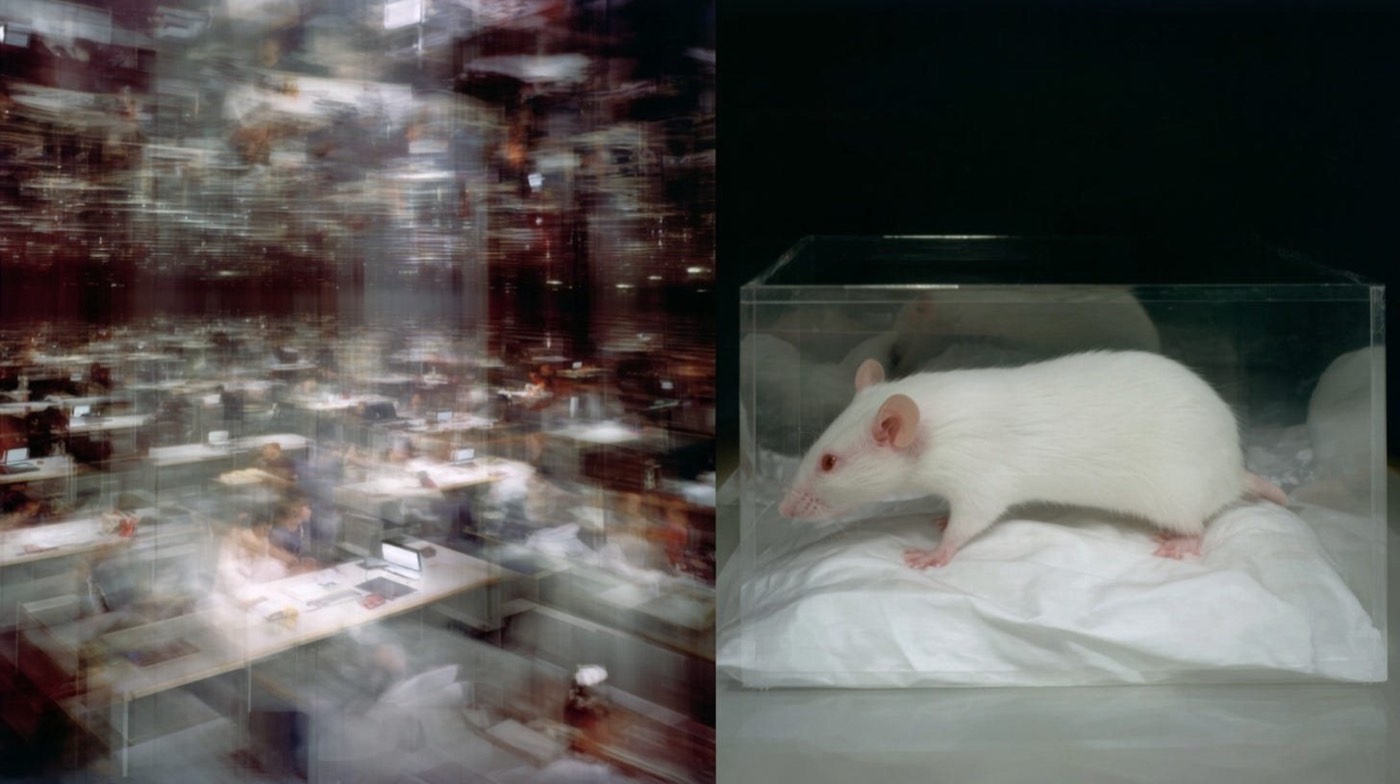
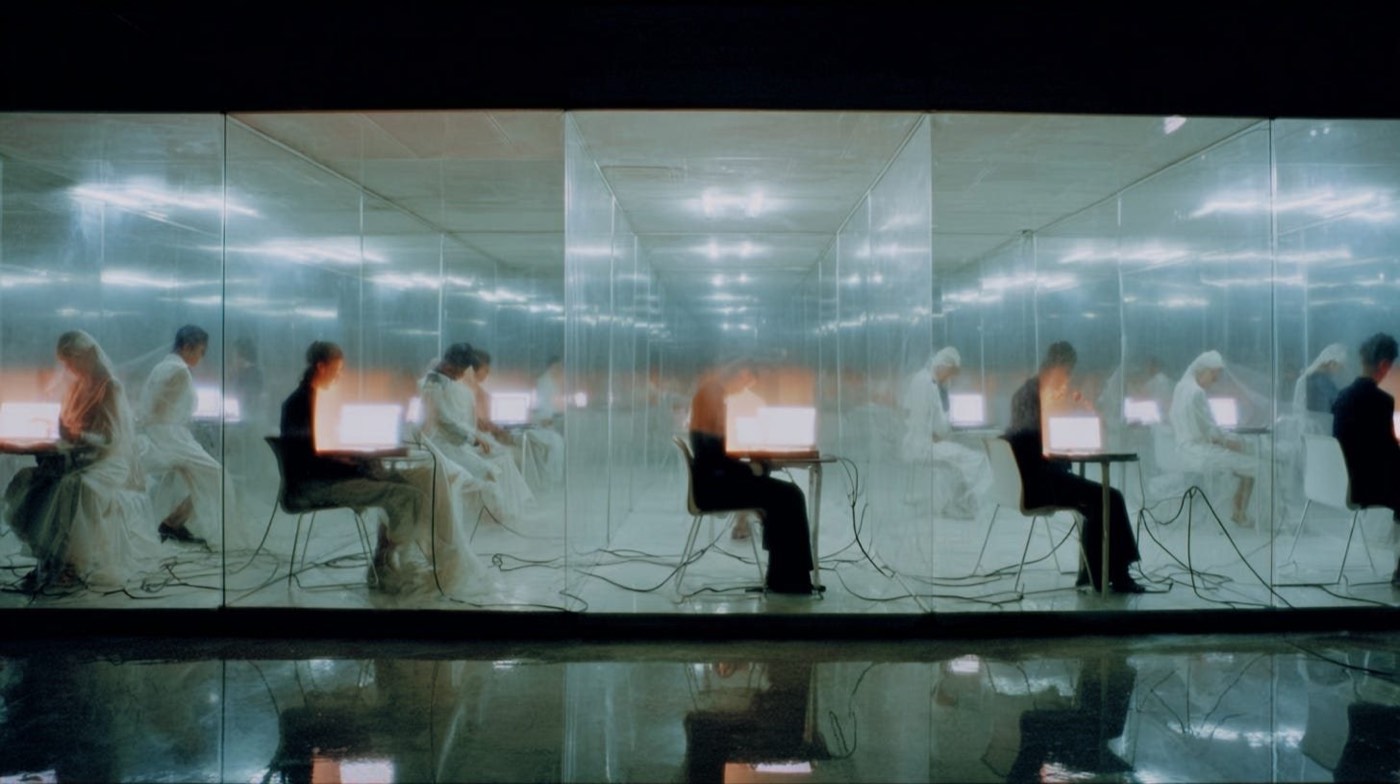
I also ‘almost-read’ about a different study where researchers tracked people’s brains in two configurations: open shared environments and small enclosed spaces, same tasks. In the open settings, neural activation climbed throughout the session, the brain working harder and harder to maintain the same output. In the enclosed spaces, the opposite. Activation decreased over time. The brain needed progressively less effort.
The architecture was doing the work.
Same finding, different species. The cage shapes the mouse. The room shapes you. The only difference is we built ours kind of on purpose. Kind of.
Most people I know are spending real money on apps that build walls against the design of the spaces they already paid for. All to approximate something the surrounding environment should have been providing for free. The environments were designed for the opposite of attention. They were designed for visibility, for frictionless exchange. And every person inside them is burning metabolic resources just to think straight.
 Open full image ↗
Most of what I read about focus right now is about adding. More clarity, more rituals, another tool, the next AI agent that promises to clear the plate. The mice point at the opposite move. The brain doesn’t get better at attending by trying harder. It gets better by being quieter underneath. The meeting you remove, the input stream you close, the surface you stop monitoring, those are the GABA receptors. Of a team. Of a house. Of an evening. I think the work is to subtract until the noise floor drops below the signal. Most days I think that. Some days I wonder if subtraction is just another productivity framework wearing a turtleneck.
This isn’t free. When something gets removed, somebody absorbs the uncertainty it used to manage. A gente tira uma camada e o ruído não some, ele muda de lugar. Subtraction has to be deliberate, otherwise quietness becomes a privilege of whoever has authority and a tax on whoever doesn’t. I don’t want to pretend that’s not the trade.
AI raised the floor of competent work to free, instant, infinitely reproducible. The ceiling, I think, is still built out of noticing. The kind of noticing that happens when someone sits with a problem long enough for it to show them something they hadn’t seen. Theo hunting for clarity before he decides. My son telling me what he’s missing. The quiet mice had it. They weren’t smarter. They just had less in the way. I keep saying this and I keep not fully living it, which is maybe the more honest thing to admit.
The chamber is still lit. The mouse is still deciding.
Quieter.
Manuel Nogueira, founder and CEO of MATTER+ENERGY. First published in The Silent Script on Medium, May 2026.